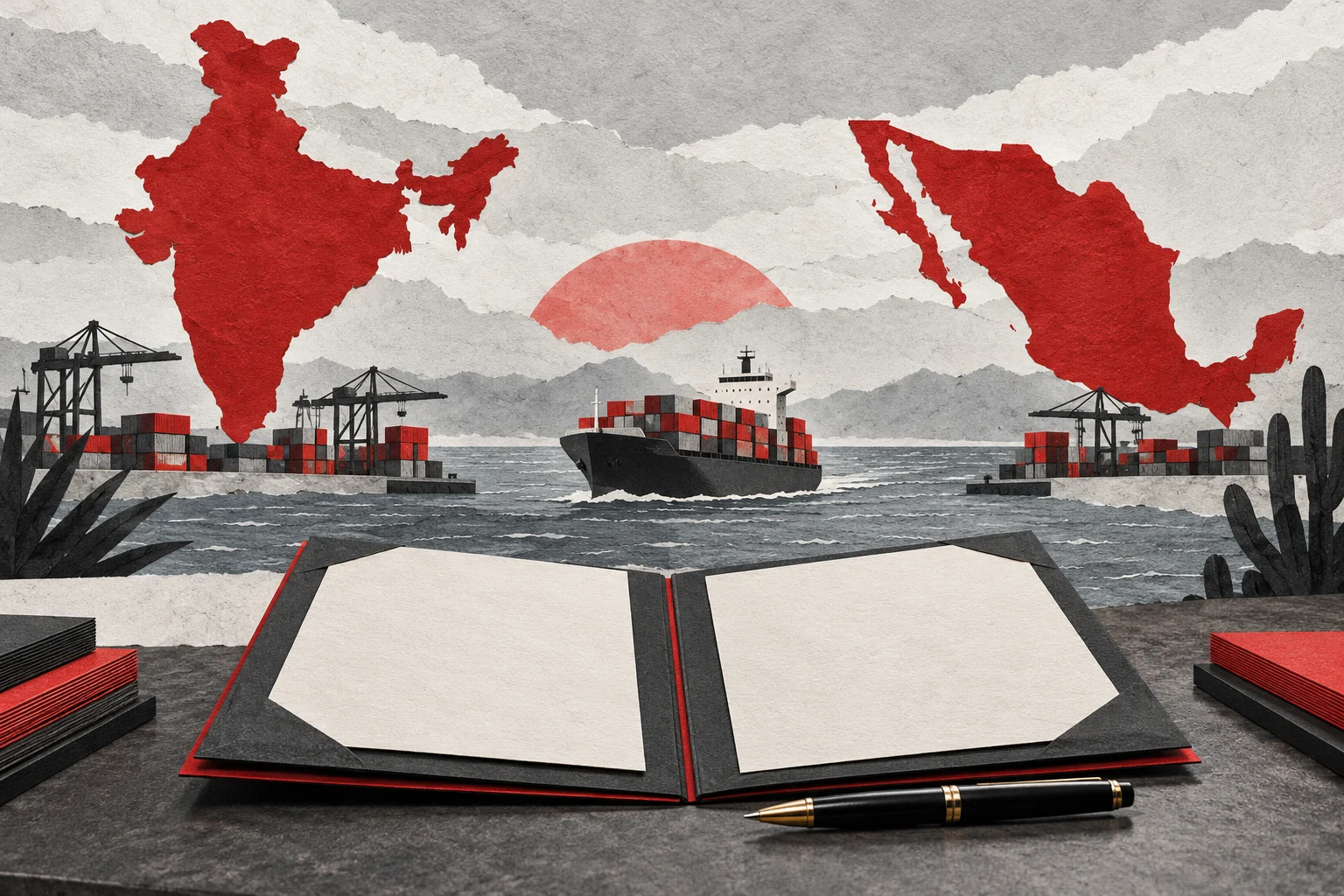
NEW DELHI, October 30 — India and Mexico have formally launched negotiations for a Preferential Trade Agreement after signing terms of reference defining the scope and framework of the talks. The announcement opens a negotiating process aimed at expanding commercial opportunities, rather than bringing a completed trade pact into force.
India’s commerce ministry announced the development on October 28. The agenda covers access for goods and the rules and procedures that determine how trade is conducted between the two economies.
For exporters, the distinction between opening negotiations and implementing an agreement is essential. The announcement does not provide a new tariff schedule, an effective date for concessions or an entitlement to preferential treatment for a shipment.
What the two governments have agreed
The commerce ministry’s release identifies goods market access, rules of origin, customs procedures, trade facilitation, dispute settlement, sanitary and phytosanitary measures, technical barriers and trade remedies as negotiating areas.
It names Commerce Secretary Rajesh Agrawal and Mexico’s Undersecretary of Foreign Trade Luis Rosendo Gutiérrez Romano in the discussions. The initiative follows the understanding reached by Prime Minister Narendra Modi and President Claudia Sheinbaum during their June 2025 meeting in Canada.
These details establish the political and administrative basis for talks. They do not reveal the eventual coverage of concessions, exclusions for sensitive products or the terms each side will accept.
Mexico’s stated objectives
Forbes México’s report, carrying information from EFE and Mexico’s economy ministry, describes the initiative as a way to broaden trade, diversify markets and encourage investment. It also notes that no dates for the negotiating rounds or their possible conclusion were specified.
That perspective matters because a bilateral agreement must serve interests on both sides. Mexican companies are seeking opportunities in India, just as Indian exporters are interested in access to Mexico.
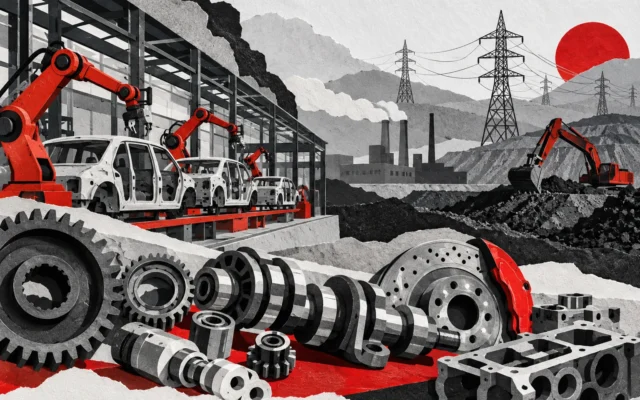
Forbes reports potential cooperation across sectors including automotive, chemicals, electronics, pharmaceuticals and agri-food. Identifying a sector as promising, however, is not the same as guaranteeing favourable treatment for all products within it.
Why Indian exporters are watching
Moneycontrol’s September background report by Adrija Chatterjee placed the proposed pact in the context of Mexico’s higher tariffs on imports from countries without trade agreements. The report identified automobiles and engineering goods among the areas facing pressure.
That earlier report anticipated a possible signing timetable. The October announcement now supersedes that forecast on the launch of negotiations, but the wider question of market access remains unresolved.
Exporters cannot assume that every existing duty will be reduced or that all affected goods will enter the agreement. Product coverage, staging and eligibility would need to be established in the negotiated text and implementing measures.
Origin rules will be consequential
The World Customs Organization explains that preferential rules of origin determine whether goods qualify for favourable treatment under a particular arrangement. Origin is distinct from the last country through which a shipment passed.
For a manufacturer using components from several countries, the eventual origin requirements can therefore matter as much as the headline tariff concession. The India–Mexico announcement lists origin rules for negotiation but does not publish the product-specific criteria that might ultimately apply.
As a practical implication, businesses will need to examine both any future duty preference and the evidence required to claim it. Simply shipping a product from one partner’s port would not, on its own, demonstrate that it meets a preferential origin rule.
Mexico’s industrial-policy context
PwC’s January 2026 tax note describes the tariff changes as part of a policy aimed at protecting domestic industry, addressing global overcapacity and supporting Plan México. That provides context for why market opening may involve sensitive negotiations rather than an automatic reversal of duties.
Opportunities and competing interests
The Economic Times reports the governments’ expectation of stronger trade links, business opportunities and more diversified supply chains. These are the stated aims of the negotiations, rather than quantified gains already secured.
An agreement could improve conditions for firms that gain access or use imported inputs. At the same time, producers facing additional competition may have different priorities. This is a general trade-policy consideration; the announcement does not provide a full public account of sector-by-sector objections.
Assessing the balance will require the actual offers, exclusions, transition periods and safeguards. Claims that the talks will inevitably benefit every industry, or necessarily harm all domestic producers, would both run ahead of the evidence.
A possible business mission in 2027
The official release says the delegations discussed the possibility of a Mexican business mission to India in the first quarter of 2027. The intended purpose would be business meetings and identification of commercial opportunities.
Business engagement can help identify practical barriers and potential partners, but meetings do not themselves change customs treatment. Commercial interest, a negotiated agreement and implementation are separate stages that should be reported separately.
What will show substantive progress
Maritime Gateway’s coverage stresses that the framework announcement does not introduce immediate tariff concessions. The next meaningful developments would include a negotiating calendar, published outcomes from rounds, an agreed text and implementation details.
Companies should continue to check the customs rules applicable to their products rather than price transactions on an assumed future concession. The announcement supplies a route for negotiation, with the outcome still open.
The current position is therefore a formal start to preferential trade talks and a defined goods-related agenda. Whether the process produces wider access, workable compliance requirements and balanced commercial gains will depend on the terms the two governments eventually conclude.
Sources and credits
- India Ministry of Commerce and Industry via PIB — official launch announcement
- Forbes México / EFE — Mexico’s economy-ministry perspective
- Moneycontrol — Adrija Chatterjee’s September tariff and negotiation background
- World Customs Organization — preferential rules of origin explained
- Economic Times — October 28 launch and business objectives
- Maritime Gateway — status of negotiations and existing trading conditions
- PwC — January 2026 tariff background and industrial-policy objectives