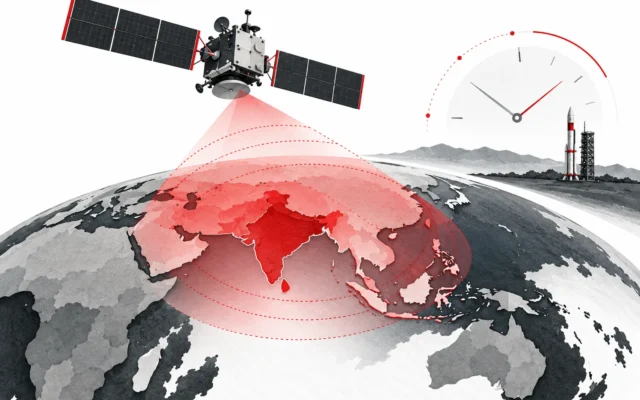

Bengaluru-based Gnani AI has introduced Prisma v3.0, a speech-to-text model designed for Indian telephone conversations and speech that switches between languages. The company’s 28 October announcement says one model supports nine Indian languages and English, with different ways to present the resulting transcript.
The launch addresses a practical enterprise problem: a caller may mix languages, abbreviations, names and amounts within one sentence. Converting that conversation into a reliable written record requires more than recognising isolated words.
What the product offers
Gnani’s product page lists Hindi, Bengali, Marathi, Gujarati, Punjabi, Kannada, Telugu, Tamil, Malayalam and English. It describes four output modes: Verbatim, Transcribe, Code-mix and Transliterate.
In the company’s description, Verbatim preserves spoken fillers and repetitions. Transcribe produces a cleaner written version. Code-mix retains the scripts appropriate to the languages spoken, while Transliterate renders speech using English letters without necessarily translating its meaning.
Those are different editorial representations of a conversation. A readable, cleaned transcript is not interchangeable with a verbatim record. The appropriate mode depends on whether the user needs convenience, operational information or a closer account of exactly what was said.
The company’s accuracy claims
Gnani’s launch blog reports a macro word error rate of 16.93 on the Vistaar evaluation protocol, compared with 19.98 for ElevenLabs Scribe v2. The blog also publishes dataset-level and language-level results.
These are manufacturer-reported evaluations. VONG has not run an independent benchmark, verified the full test environment or established that the figures will transfer unchanged to every customer’s calls.
Word error rate compares a model’s output with reference text, counting substitutions, deletions and insertions. Lower scores are better on the same evaluation. An average score, however, can conceal differences between languages, recording conditions and individual tasks.
A favourable benchmark should therefore be read as evidence to examine, not a guarantee. Errors involving an amount, a negation or an account reference can have different consequences even when they contribute similarly to an aggregate score.
Indian telephony is the target environment
Express Computer’s launch report describes the model as trained on Indian telephone audio and code-mixed speech. It reports native support for the lower-bandwidth audio commonly used in phone systems, alongside features for formatting numbers and handling specialised terms.
That focus could matter for contact centres and voice-based services whose recordings differ from clean studio speech. The article establishes the product’s stated target environment; it is not an independent finding that the system resolves every problem in that environment.
Accent, background noise, overlapping speakers and an unfamiliar product name can each change a transcription task. A buyer evaluating the model would need recordings representative of its own use, with permission to process them and an agreed definition of success.
How developers can access it
The company’s SDK documentation for version 0.9.0, released on 27 October, describes Prisma v3.0 as an opt-in model across REST, streaming and batch interfaces. It also shows language hints, supplied keywords and segment-level language output.
These interfaces serve different workflows. A live assistant needs text while the conversation is happening. A post-call review process can wait for a completed recording. A backlog of files may require a batch process.
Documentation confirms the existence of described integration paths. It does not establish uptime, customer-specific latency, final enterprise pricing or compatibility with every existing system. Those questions require product testing and contractual terms.
The potential value for users
For a business, better transcripts could reduce manual correction and make call records more useful. For a caller, the potential benefit is being understood without being forced into a language or speaking style that is less comfortable.
That value should be assessed alongside the cost of mistakes. A transcript used only for internal topic analysis can tolerate a different level of uncertainty from one used to confirm a payment instruction.
The company’s output controls also raise a useful design question: who decides which version becomes the official record? Retaining the recording, the selected mode and any corrections can help reviewers understand why a written version looks as it does.
Privacy and human review remain separate questions
The product announcement is not a complete privacy or procurement assessment. Organisations considering deployment need clarity about consent, retention, access, storage and whether audio is used for further training.
These are questions for any speech service, not evidence of a privacy failure by Gnani. Similarly, choosing a domestic supplier does not remove the need to evaluate data handling.
Human review is particularly important where a transcript triggers a consequential action. A process can require confirmation of critical details while still using automation for less sensitive work. The right balance depends on the consequences of error rather than on the model’s marketing category.
What independent evaluation should establish
A useful comparison would test several systems on the same authorised recordings and report results by language, noise conditions and task. It would also measure correction effort and the accuracy of critical fields.
Prisma v3.0’s launch expands the options available for Indian-language speech recognition. The company has supplied detailed claims and integration material, while launch reporting corroborates the announcement. The remaining question is how those capabilities perform in independent, realistic deployments, where the quality of a transcript is judged by what users can safely do with it.
More coverage: VONG Technology.